
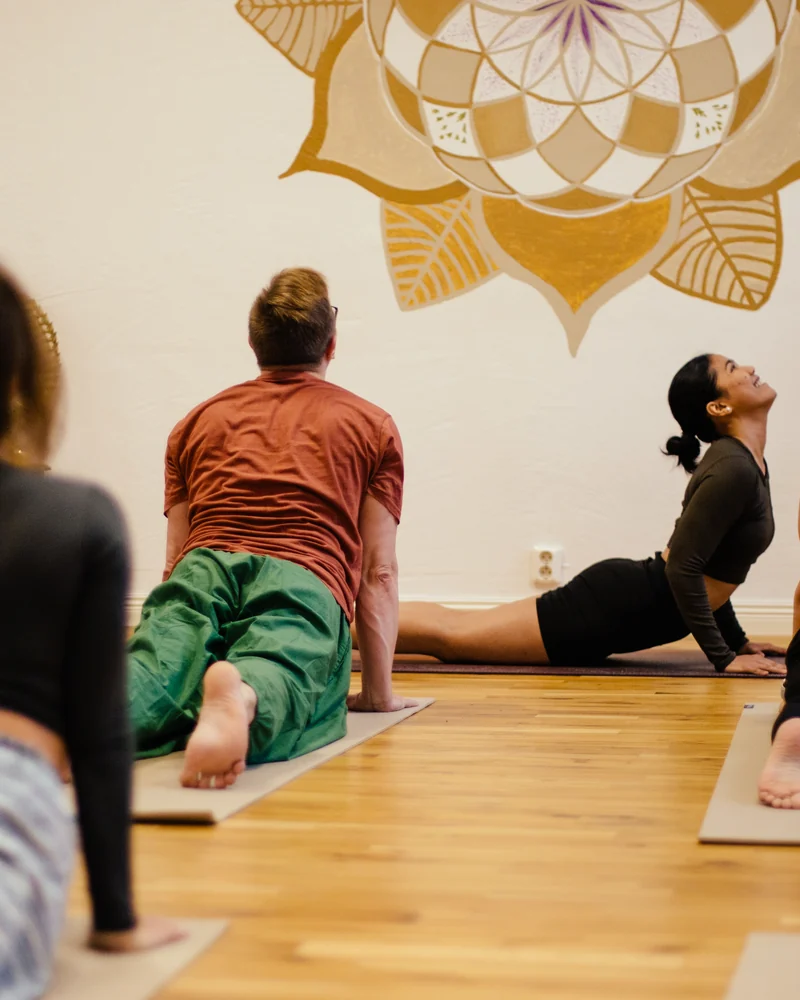
Find the class that fits you
Hatha, Yin and Vinyasa Yoga, 60 to 75 minutes, taught in English at Stora Nygatan 38. Every class is open to all levels — tell your teacher if it is your first time.
One approach, several ways in.
The weekly timetable is built on three styles that share a method rather than compete with it. Hatha works with the postures and the breathing practices and gives you time inside each shape. Yin takes fewer shapes and holds them long enough for the work to reach the connective tissue. Vinyasa links them, and lets the breath set the rhythm.
What runs through all three is the same instruction: notice what a posture does once you are in it, not only whether you can get there. Strength, balance and flexibility come as a by-product of that attention — and some sessions take it further, into the chakra system and the energetic side of the practice, which is the ground the year-long Deep Yoga course works from.
Healing Yoga and Rope Yoga stand alongside those three in the weekly timetable, slower and more supported. Beyond the week there are two longer formats: Couple Yoga, practised two by two and held as a workshop, and Deep Yoga, a year-long course in a group that stays the same.
What each class is like.
Hatha Yoga
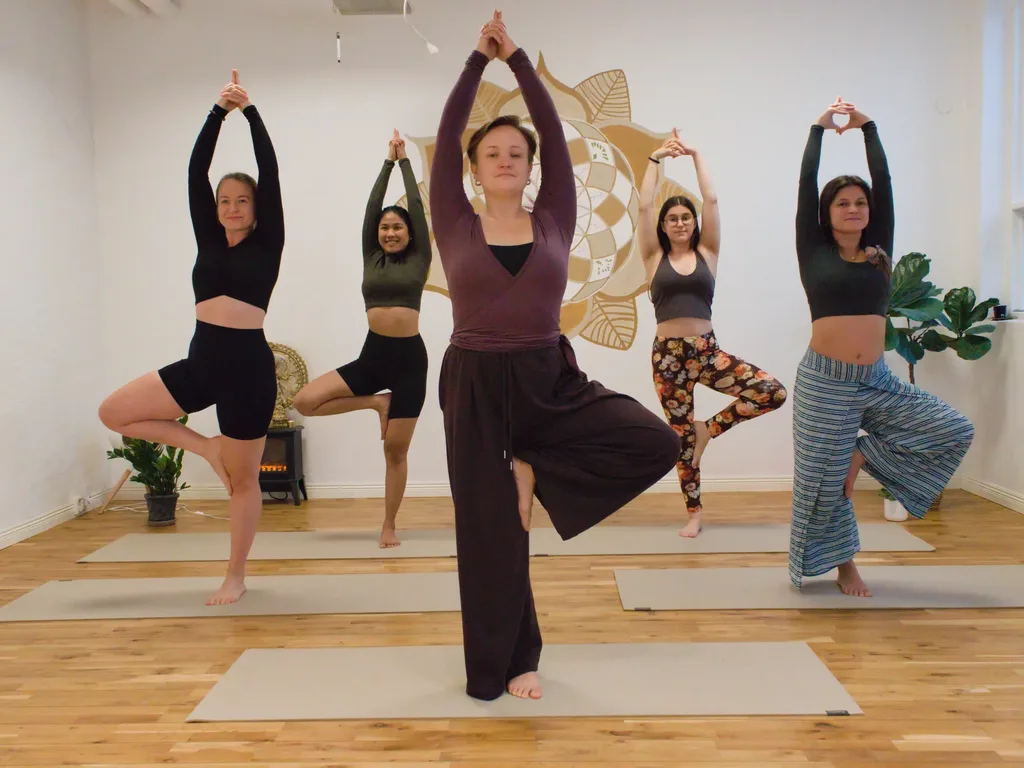
The classical foundation. Postures are held for several breaths rather than flowed through, with pauses between them — so there is time to hear an instruction, try it and adjust. The most welcoming first class.
The Hatha Yoga card covers both the regular Hatha Yoga classes and Hatha Flow classes shown in the timetable.Read more about Hatha
Yin Yoga
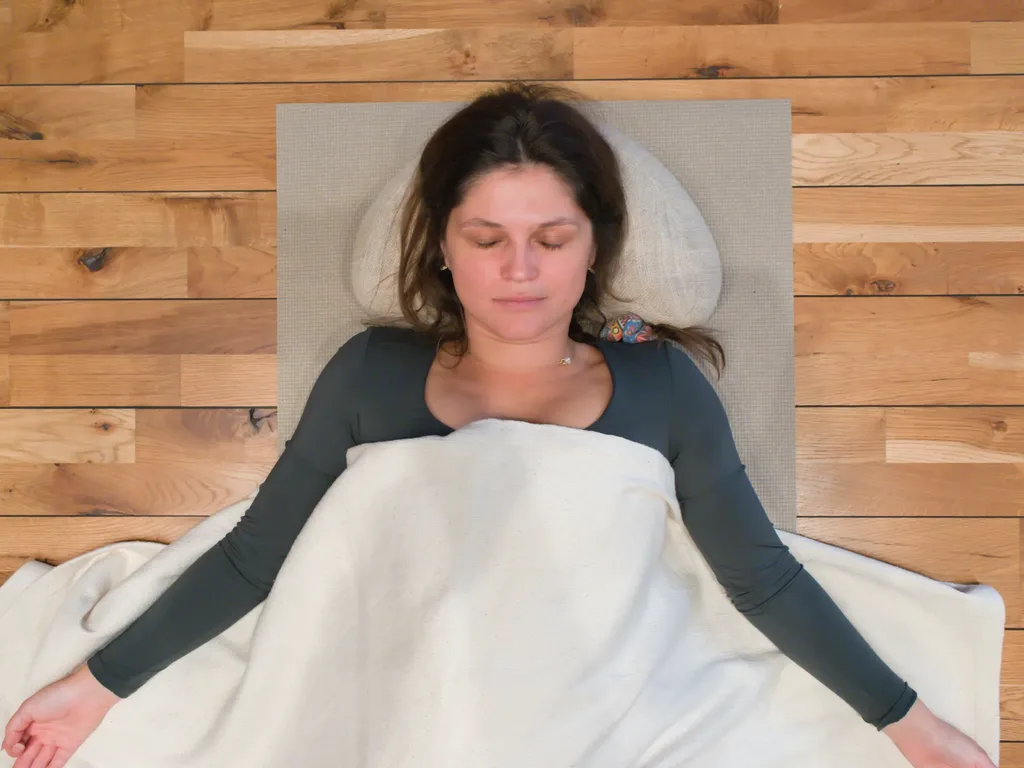
Long, supported holds, mostly seated or lying down, with the muscles relaxed. Nothing strenuous. Often chosen by people who train hard elsewhere, and for slower evenings.
Vinyasa Yoga
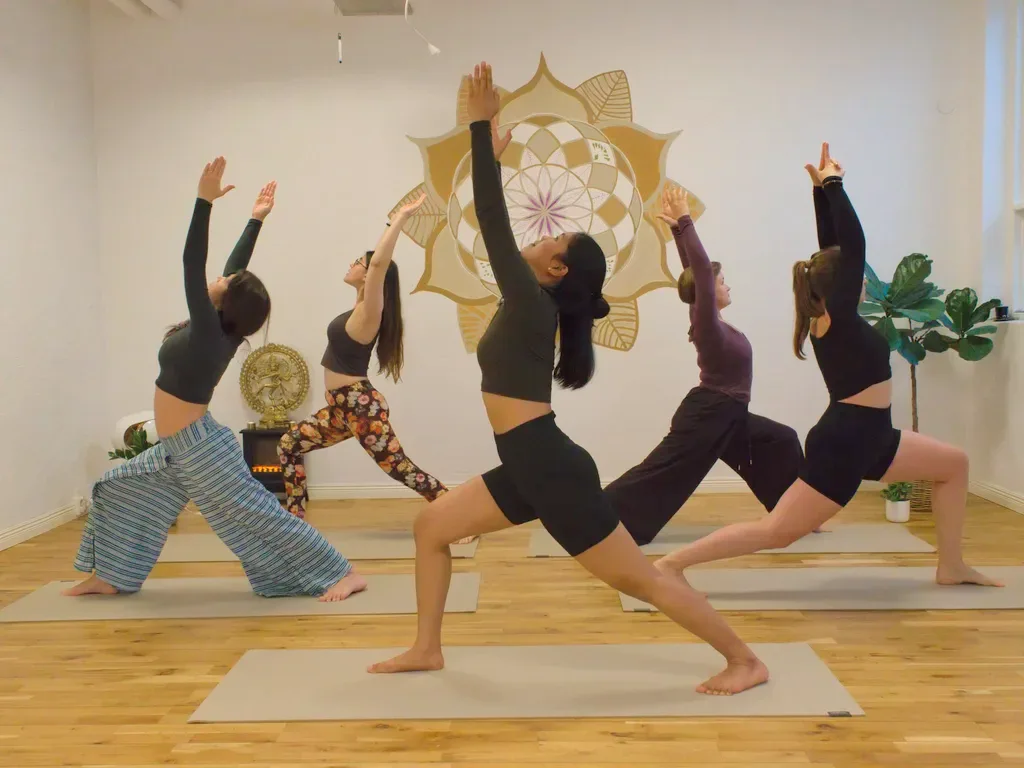
One posture leads into the next, with the breath setting the rhythm. More physically continuous than Hatha or Yin. Beginners are welcome — a slower class first can make the vocabulary easier to follow.
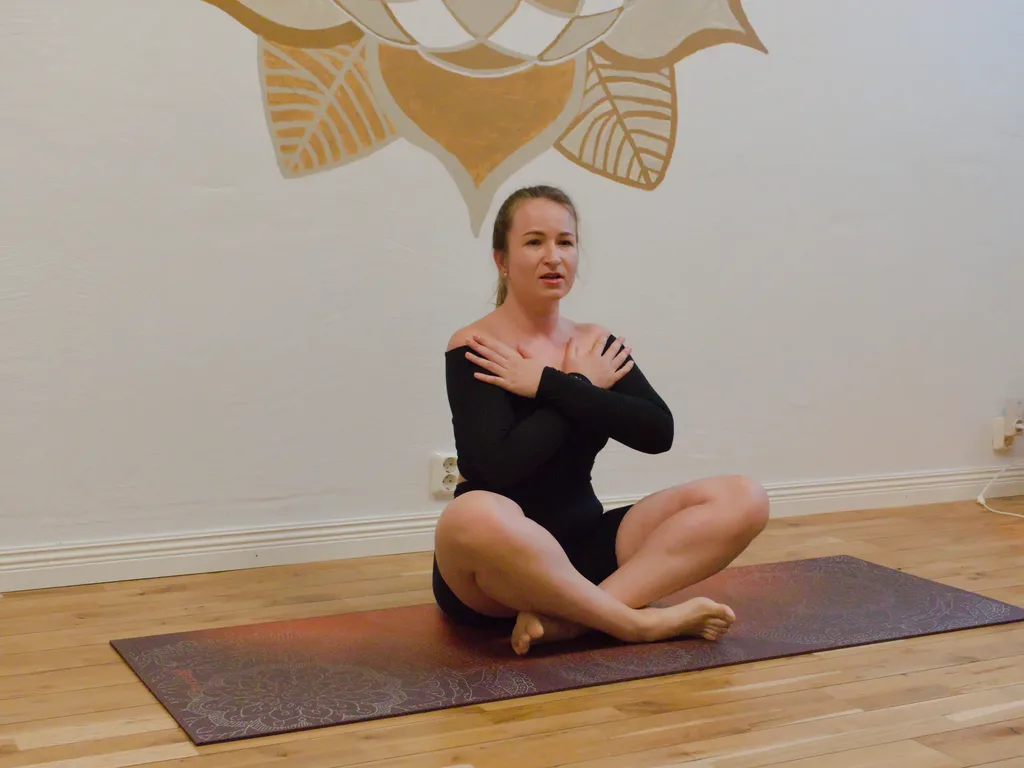
Healing Yoga
Slow and body-centred, taught by Solomiia. Shapes are supported and held without strain, the pace is unhurried, and every position can be made smaller or left out.
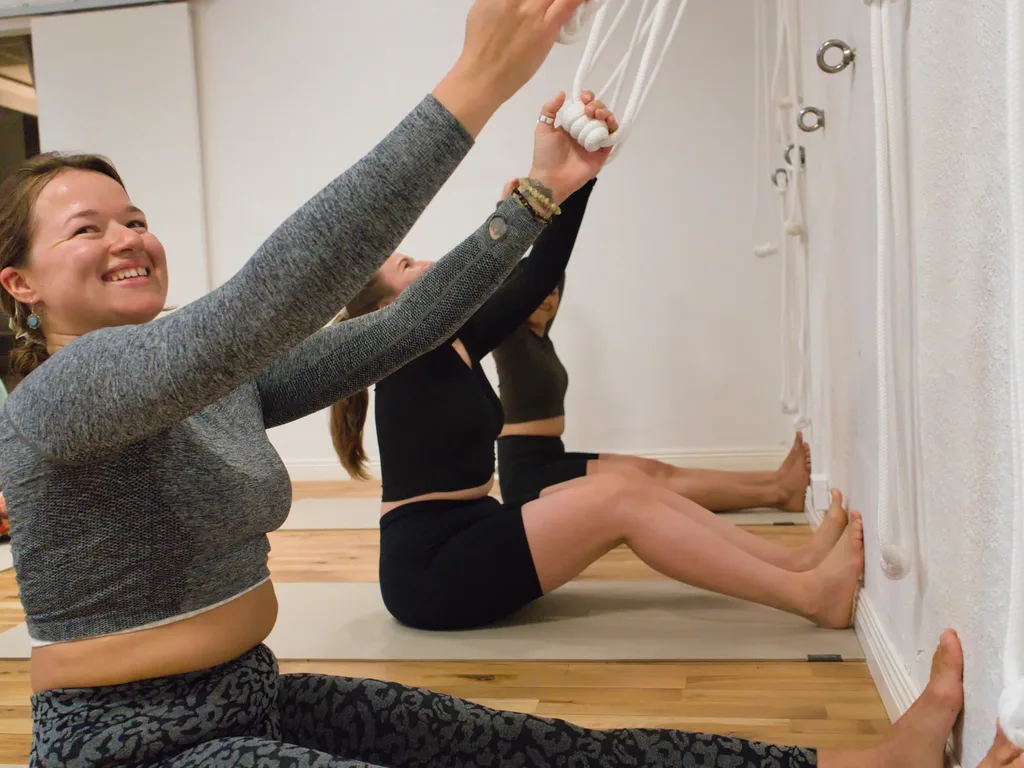
Rope Yoga
Hatha practised with the ropes fixed to the studio wall, taught by Ihor. A sling takes part of your weight, so a shape can be held longer — or found with support the mat alone does not give.
Courses and workshops.
Neither of these stands in the weekly timetable, so they are not something you drop into on a Wednesday. Couple Yoga is announced as a workshop, with the dates in the booking system. Deep Yoga takes a group at set times of year and keeps it for the whole course.
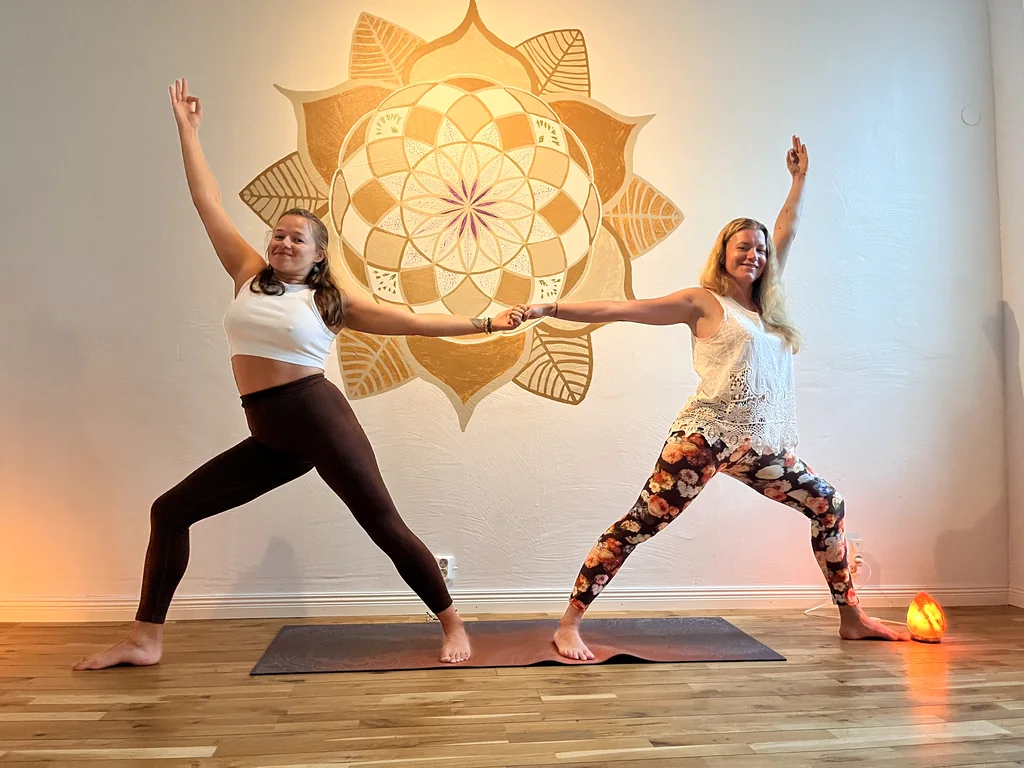
Couple Yoga
Practised in pairs — and it does not have to be a romantic partner. The sequences are guided, and the pairs support each other’s weight in shapes that are hard to hold alone. It runs as a workshop rather than a weekly class.
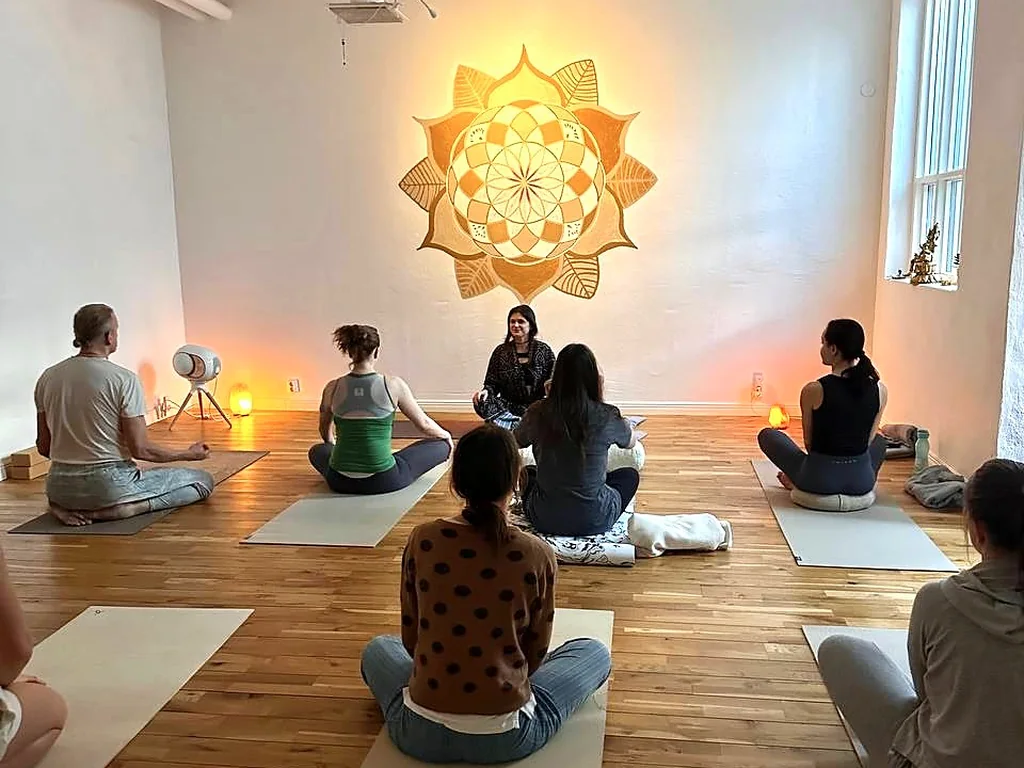
Deep Yoga
Not a class you drop into, but a year. The practice on the mat continues — Hatha, Vinyasa and Yin — alongside meditation, the chakra system and work with energy and inner blocks. Two hours a week in a small group that stays the same, guided by Milana Nalin. Groups form at set times of year.
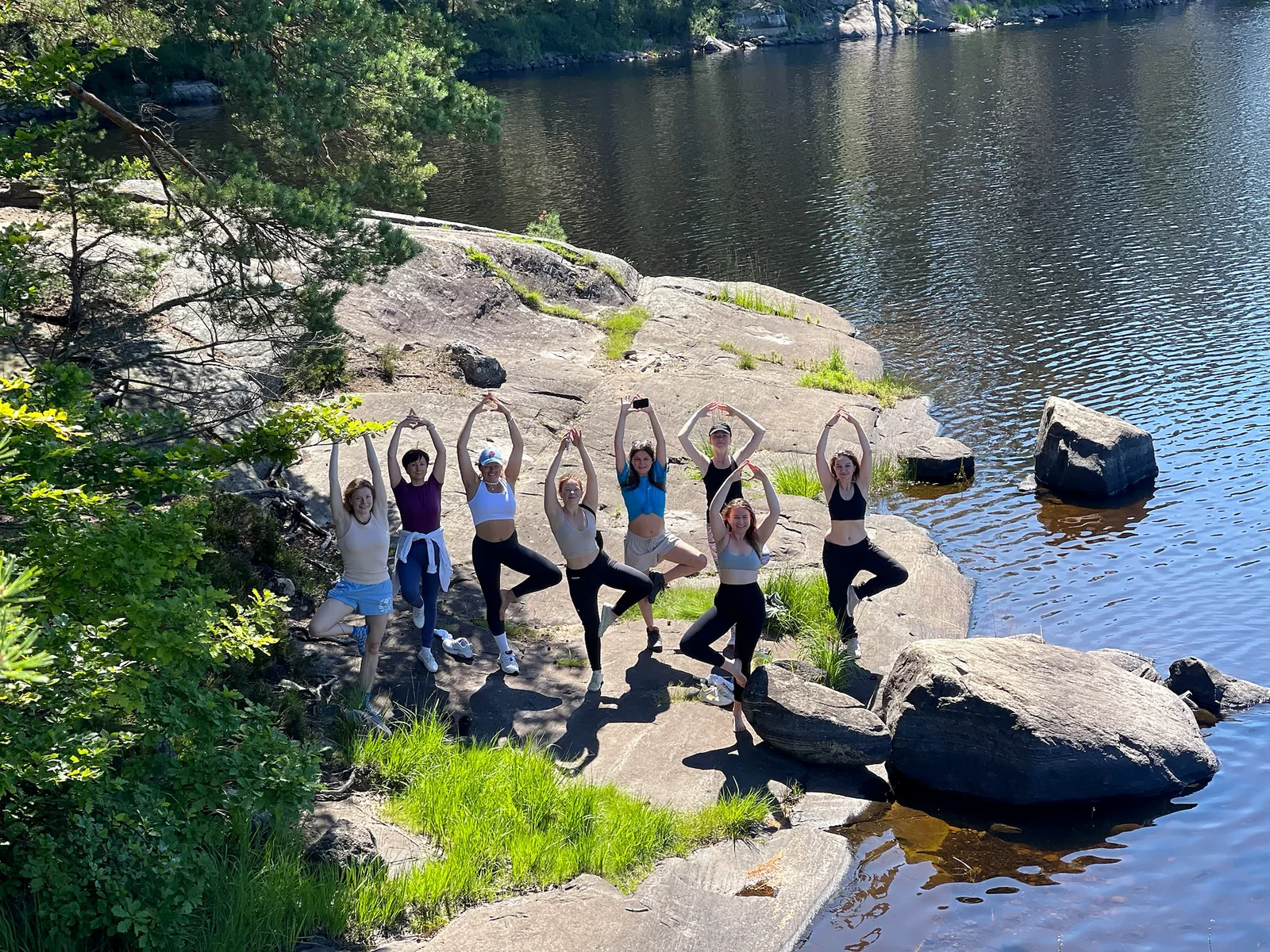
Deep Yoga
A year-long course in a stable group: two hours each week of practice, meditation and the deeper teachings. It runs separately from the regular timetable.
Nothing about this should feel complicated.
Book your place
Reserve online through the booking system, and come about ten minutes early to settle in.
Bring almost nothing
Something comfortable to move in, and water. Mats are at the studio.
Go at your own pace
You set the pace and can rest whenever you need to. Tell your teacher before class if you are new.